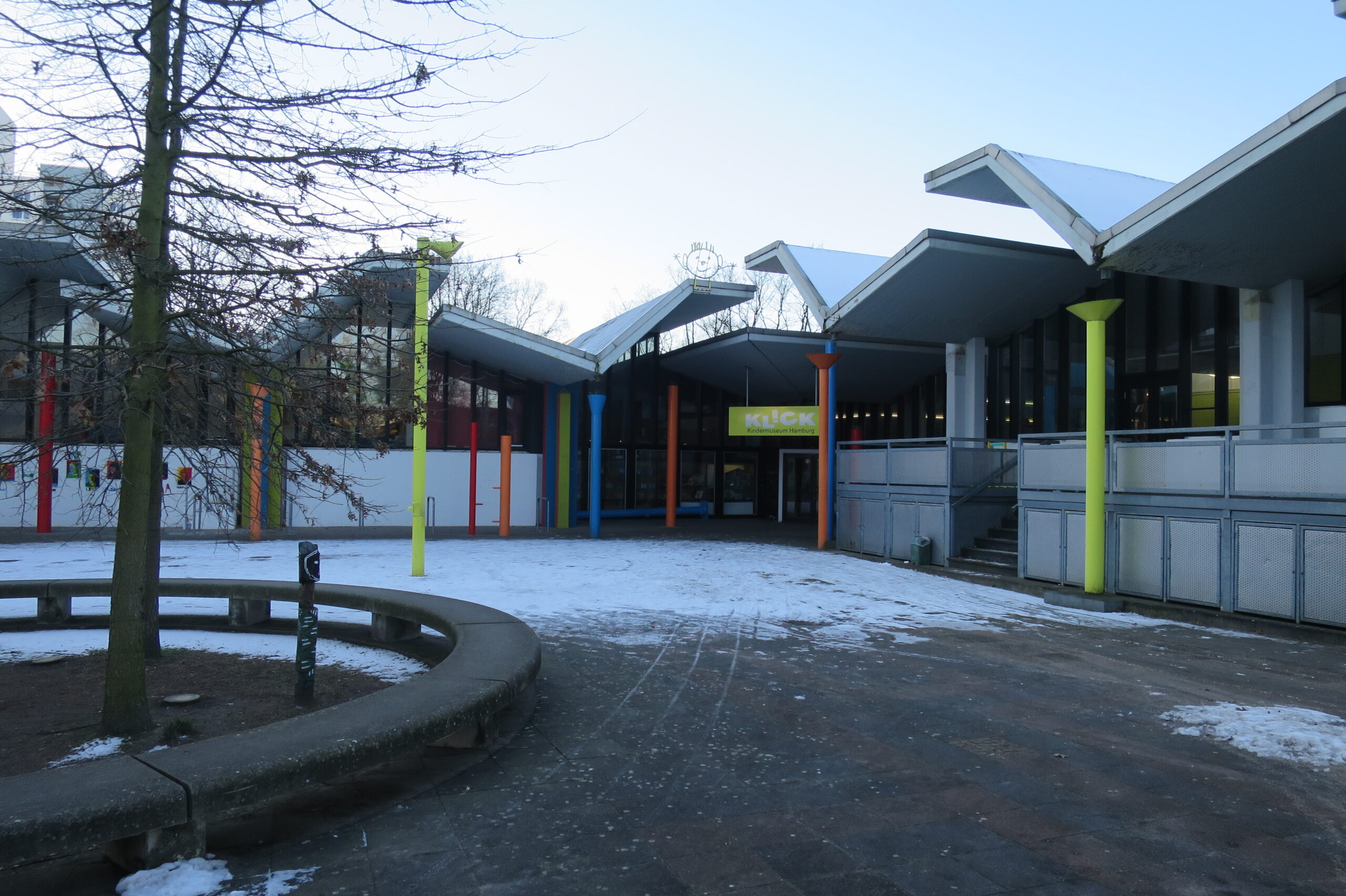

The listed community center in Hamburg Osdorf is being extensively renovated, extended and reorganized for the Ev.-Luth. Maria-Magdalena-Kirchengemeinde. The building, which was erected between 1970 and 1972 according to an award-winning competition design, with its open sequence of rooms and striking concrete roof, requires particular care in dealing with the existing building and architecture. The aim is to preserve the design quality and make the building technically, functionally and economically viable for the future.
The KL!CK Children’s Museum has been using the majority of the space since 2004 and attracts around 50,000 visitors a year. As part of the refurbishment, the museum space will be expanded to around 2,240 m² and will take up around 80 percent of the total area in future. Former nursery areas will be integrated, floor plans restructured, uses clearly separated and barrier-free access provided by an additional elevator. Fire protection, acoustics and technical building equipment will be adapted to the requirements of a highly frequented place of learning and experience.
TePm controls the project using agile project management and is responsible for award management. We coordinate the parties involved, structure decision-making processes and ensure that planning, construction progress and funding remain closely interlinked. The integration into the RISE program requires precise control of funds and funding-compliant award processes.
The refurbishment of the listed building during ongoing operation is particularly challenging. The roof and insulation are being renewed, exposed concrete repaired, windows replaced and the building envelope optimized in sections. At the same time, PCB and asbestos contamination is being remediated under high safety requirements and integrated into the schedule.
This creates a stable framework for a lively cultural and learning location that preserves the architectural heritage and at the same time creates space for further development.
This project is funded by the “Social Integration in Neighborhoods” investment pact of the federal government’s urban development funding program and by the Free and Hanseatic City of Hamburg.